Brinjal Production Plan by GROWTECH
Importance
Brinjal is a member of the Solanaceae family. In addition to China and Western Europe, Bangladesh, Pakistan, Japan, and India also cultivate brinjal. In addition to having a variety of macro and micro nutrients that are good for human health, brinjal is low in calories. The mineral potassium, which ranges from 200 to 600 mg/100 g of pure water, is readily available in brinjal. Brinjal is also very rich in calcium, iron, and magnesium. It covers an area of 9,044 acres in Pakistan and produces 88,148 tonnes. Brinjal fruit is a succulent berry which varies in colour from sparkling purple to black and white green yellow. Brinjal is a good source of nutrients. Raw brinjal has 92% water, 6% carbs, 1% protein, and no fat.
Climatic Conditions:
Areas with good irrigation facilities and a hot, humid climate, are suitable for growing brinjal. Frost and cold weather are not good for brinjal crop, its leaves dry up, plant stops flowering and fruiting to the extent that the plant eventually dies.
Soil Type:
Brinjal is a hardy crop that can be cultivated in a variety of soil types. Because it is a long duration crop, it requires well-drained rich sandy loam soil, which is ideally suited for cultivation and production.
Seed Rate:
150-250gram seed / acre for raising nursery of 1 acre.
Nursery Raising and Transplantation:
For nursery sowing, choose a field that is slightly elevated from regular land so that excessive water can drain off efficiently during rainfall. Prepare small square beds, around 4 or 5 feet in width, with row spacing 14 inches apart. Sowing should be done at a depth of half inch. Cover the seeds with a layer of well rotten cow dung compost and straw after planting. Then, apply mulch to the beds and maintain regular irrigation. Once the seedlings emerge, remove the mulch. For spring cultivation, nursery sowing should be done in February, and transplanting should be done in March, crop yields from May to September. Nursery sowing for seasonal crop (summer crop) should be completed by the end of June, and transplanting should be done in July and August. In February and March, the second season can also produce harvests if it is protected from frost throughout winter. For the third season, nursery sowing should be done in November inside low tunnels, and then transplanted to the field in February.
Land preparation:
To prepare fine seedbed 2 to 3 ploughings followed by planking are recommended. Prepare the field in wattar condition (optimum soil moisture condition). Healthy seedlings with 3–4 leaves or 12–15 cm in height are ready for transplanting. Transplanting is done in the evening, and light irrigation is done after planting the seedlings.
Approved Varieties
| Name | Seed Rate |
|---|---|
| Local long | 200-250 grams / acre |
| Nirala (Oblong) | 150-200 grams / acre |
| Be-misal | 150-200 grams / acre |
| Qaisar (Oblong) | 150-200 grams / acre |
| Dilnasheen (Round) | 150-200 grams / acre |
Fertilizer Management
| Soil Type | Fertilizers Bag / acre |
|---|---|
| Medium Fertile Soil | 1-bag DAP and 1- bag SOP at sowing time 1-Bag Urea on earthing-up time |
Note: Foliar application of potash @500ml/acre after every 10 days interval in harvesting period will help to maintain the proper fruit size.
Irrigation
Irrigate the field after every third or fourth day during the summer season and after 12 to 15 days during the winter season. Timely irrigation is very important for high yields of brinjal. Brinjal fields should be regularly irrigated to keep the soil moist during frost days. Avoid water logging in the field since brinjal cannot withstand it.
Weeds Management
Generally, two - four weeding's and hoeing are necessary for weed control, aeration. Mulching with black polythene sheet reduces weed growth and maintains soil temperature.
Chemical control:
For khbal, swanky and Baru grass spray quizalofp p ethyl @500ml/acre. For all types of weeds, glyphosate can be used by using shield.
Diseases and Their Management
| Diseases | Symptoms | Control |
|---|---|---|
| Southern Blight | • Dark-brown lesions appear on the stem at or just beneath the soil line. As the disease progresses, infected plants wilt and die. | • Grow plants in raised beds to promote soil drainage • Spray Trifloxystrobin +Tebuconazole 75% @65 grams/ 100 liters of water • Flood Thiophenate methyl 70%@ 1 kg per acre |
| Wilt | • Dropping of entire leaves along with yellowing of crop. • Wilting or drying of entire plant is seen. |
• Thiophenate methyl 1 kg per acre (flood) Or Spray Propineb 500 grams/ 100 liters of water |
| Leaf Spot | • Symptoms initially appear as minute brown to black spots on the lower leaf surfaces. • Centers of the spots dry out and cracked. |
Spray Pyraclostrobin + Metiram 60 % @ 600 g/100 liters of water Or Diamethomorph+ Mancozeb 69% @ 500 grams /100 liters of water |
Insects / Pests and Their Management
1. Jassid
It is a wedge shaped and pale green insect of about 3.5 to 5mm length having a black spot on each transparent fore wing. It turns reddish brown during winter. Both nymphs and adults, suck plant sap as a result of their severe attack, the leaves curl, turn pale, bronze and dry up.
Chemical Control:
Spray Dinotifuran 20 SG @ 120 gm or dinotifuran 30% @ 75 ml or Thiamethoxam 25wg @ 24 g per acre.

2. Aphid
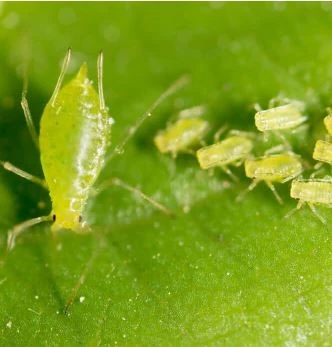
Aphids are tiny yellowish to dark-green soft-bodied insects, the adult is 1mm long and has two projections/ small ducts called cornicles on the dorsal side of abdomen.
Mode of damage:
The primary damage caused by aphids to eggplants is the production of sticky honeydew and subsequent growth of black sooty mold on the honeydew. They also cause stunted plant growth by feeding on them early in the season before bloom.
Chemical Control:
Use Imidacloprid 20 SL @250 ml or Acetamaprid 20 SP @ 125 g /acre.
3. White Fly
It is small winged insect having light yellow body of 1.0-1.5mm length dusted with a white waxy powder. Wings are pure white and insect has prominent long legs. Nymphs suck sap from the leaves and lower their vigor. Sooty mold develops on infected leaves and the plants give blackish appearance.
Chemical Control:
Spray acetamaprid 20 SP @125 grams per acre or spray Flonicamid 50% @80g/acre or clothianidin 20% SC @300ml/acre in case of adult fly attack only. In case of nymph attack, use buprofezin 25% @ 600 grams per acre.

4. Leaf Miner
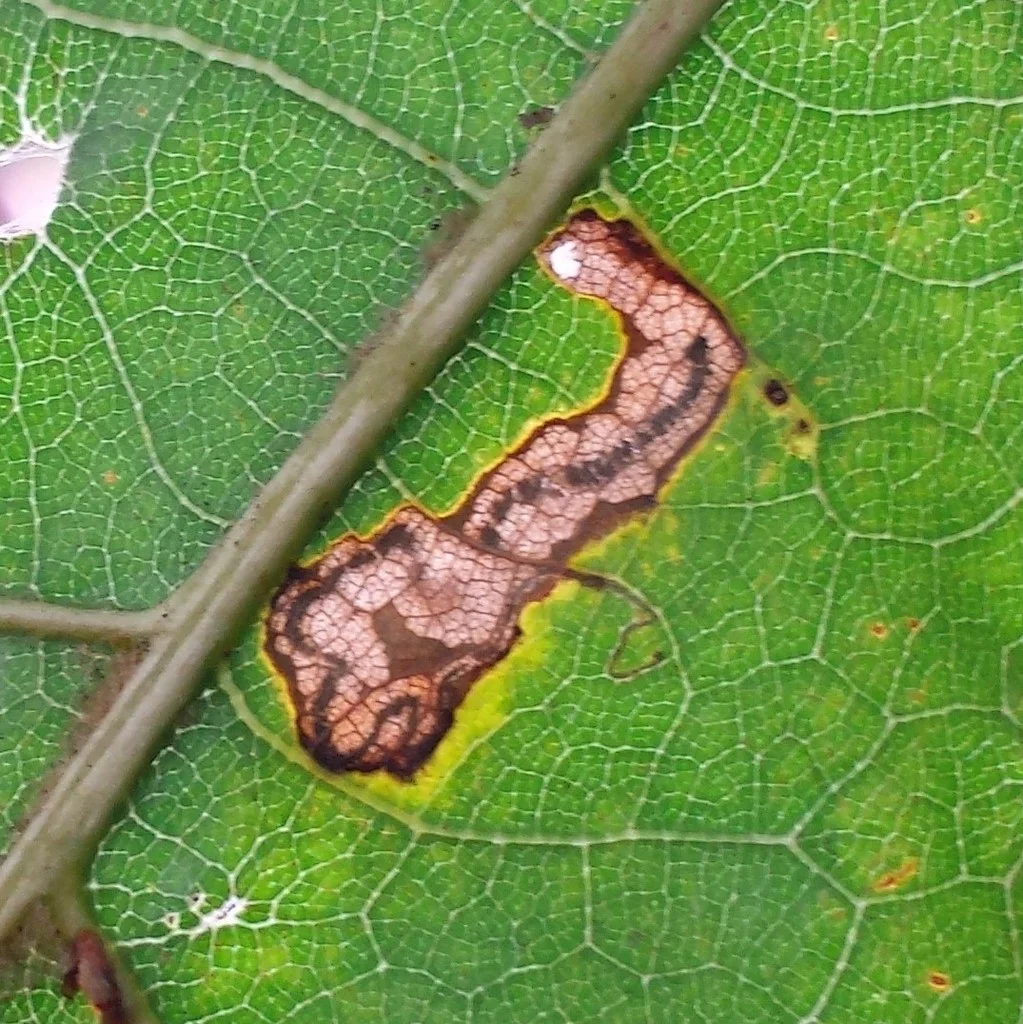
Leaf miners are tiny greyish black flies about 2 mm long, whose larvae (grubs) feed under the surface of leaves. Feeding causes loss of healthy leaf tissue, so the plant can't capture enough sunlight and often becomes infected with.
Chemical control:
To control this insect, spray Bifenthrin 10% E.c @330- 500 ml/ acre.
5. Fruit Fly
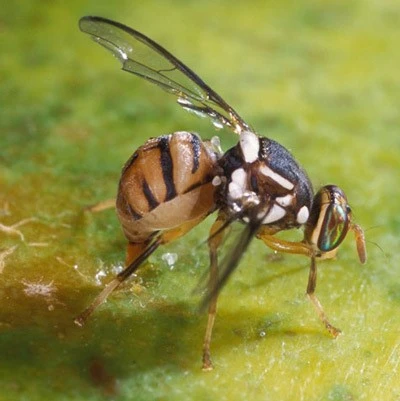
Generally, it has a yellowish color, female fly punctures the skin of the fruit and lays eggs underneath it. Decay is caused by the larvae feeding in the flesh of the fruit, which renders the fruit unmarketable.
Chemical control:
Use Malathion 57 EC @500 ml/acre or Alpha cypermethrin @100ml/acre.
6. Root Knot Nematode
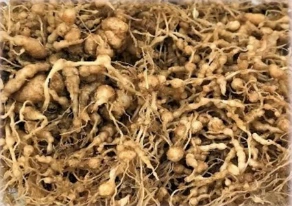
It is common in brinjal crop. These are more harmful at initial stage of seedlings. They cause root galls. Due to infestation of root knot nematodes, plant get stunted, give yellow appearance and thus affect yield.
Chemical control:
Upon the appearance of disease symptoms, soil application of Carbofuran @ 8 kg/ acre.
7. Fruit borer
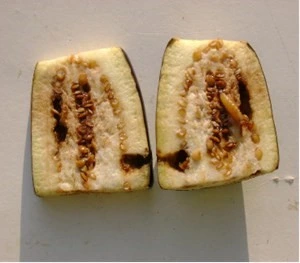
It is one of the major and serious insect pests of brinjal. A short pinkish caterpillar bores into the terminal shoot and eats internal tissue in initial stages, later it bores into the young fruit. The large holes can be seen on the infected fruits. The insect affected fruits become unfit for consumption.
Chemical control:
Use Emamectin benzoate @400 ml/acre. In case of severe infestation, use Triazophos @400 ml + Acetamaprid @125 g + Emamectin @100ml/ acre.
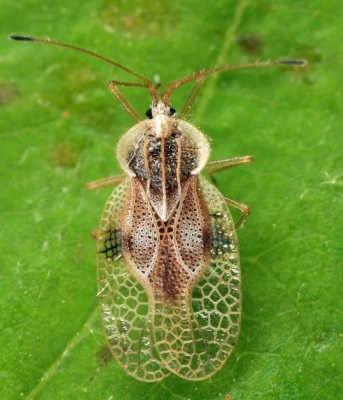
8. Brinjal lace wing bug
Lace bug adults and nymphs feed on the underside of leaves by sucking fluids from plants' photosynthetic tissues. This causes bleaching that can become very obvious on the upper leaf surface.
Cultural control:
Wrap plastic and sticky traps around stem and branches.
Chemical control:
- Uproot and destroy the infected plants.
- Spray Clothianadin @200ml /acre.
9. Hadda beetle
Both adults and larvae scrape the bottom epidermis of leaves in a distinctive manner, leaving stripes of uneaten regions behind. The leaves look to be choked. In severe infestation, all of the leaves may be eaten away, leaving just the veins (Skeletonization), and the plants may wither.
Chemical control:
Spray 500 grams of Carbaryl or 2.5% Lambda Cyhalothrin 2.5 % EC @250 ml/ acre or Bifenthrin @330ml/ acre.
Harvesting
Brinjal is harvested when the fruit attain proper size, color and before ripening stage. Fruit should have glossy appearance, attractive bright color to fetch good prices in the market. Brinjal fruits cannot be stored at room temperature for long duration because of high transpiration rate and water loss.




.webp)
