Citrus Production Plan
Importance
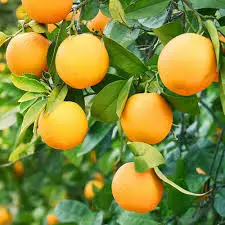
Citrus fruits are highly nutritious and contain massive vitamins and minerals. In Pakistan, over 30 types of fruits are being cultivated, among which citrus is taking lead with 30% of the country's total fruit production. Punjab province alone contributes to over 90% of the citrus fruit production, which is then distributed through various value chains in both domestic and international markets.
Soil and climate
Light loam, well drained soils are best for citrus cultivation. Citrus don't grow well in clayey, sandy and water-logged soil or soil having high salts concentration (>1000ppm). Soil surface (8 to 10 feet depth) should not contain gravels and calcium carbonate and water should be 10 feet deep from the ground. Citrus is grown in tropical and sub-tropical climate (upto 2500 feets higher than the ground level). Temperature is the main factor affecting, time of blooming, maturity, producing and fruit quality of citrus. Optimum temperature ranges from 25 to 35 °C.
Sowing and propagation
Rootstocks are generally grown through seed. T-budding is the common method of citrus cultivars propagation. It is recommended to select buds from mature wood of productive and healthy trees. Graft the buds onto the recommended rootstock at a height of 9 to 12 inches.
Transplantation
Citrus fruits are planted twice a year, during the spring season (February-March) and the autumn season (September-October). However, trees planted during the autumn season tend to be more successful. Therefore, bud should be grafted onto the rootstock at least two months prior to planting in the orchard.
Using a square method, 90 to 132 trees can be planted in one-acre area. After marking the positions for the trees, dig pits measuring 3x3x3 feet using a planting board. While digging the pits, set aside the top one foot of soil separately from the remaining two feet. Keep the pits open for 15 to 20 days so that sunlight can kill any harmful pests. Then, fill the pits with a mixture of one-part topsoil, one-part well-rotted manure, and one-part dried cow dung fertilizer.
Fill pits slightly above the ground, around 3 to 4 inches higher than the surface level, so that the soil mixture do not sink below ground level after watering. Once the soil settles, plant the trees in the pits using the planting board as a guide, and firmly pack the soil around the tree on all sides. Also, mound the soil around the base of tree to form a water catchment. Finally, tie the branches to stakes using a rubber band to secure them. Make sure that the trees are of the correct variety, healthy, and suitable in age and size. Purchase them from reliable sources and plant them during cool weather.
Spacing
- For sweet orange, mandarin, grape fruit, tangerine, tangelo and lime: Plant to plant distance of 20 feet and row to row distance of 25 feet should be maintained.
- For lemon: Plant to plant distance of 10 feet and row to row distance of 15 feet should be maintained.
Pruning
Main purpose of pruning is to remove unproductive old branches which allow young branches to grow and produce better quality fruits. However, in Pakistan the systematic pruning practices are not commonly followed, except for the removal of dried, diseased and overcrowded branches. The ideal time for pruning is immediately after the harvest (fruit picking). However, if the crop yield is excessive, light pruning can also be carried out after the fruit setting.
Intercropping
Since citrus trees require a significant amount of time before they start generating profits for the grower, it is recommended to supplement one's income by cultivating short-term crops, especially during first four to five years. Beside, providing extra income intercropping also helps in controlling weed growth, minimizing soil moisture evaporation, and enriching the soil with substantial amounts of organic matter. Following crops can be grown in citrus orchard:
| Season | Crops |
|---|---|
| Rabi | Peas, Turnip, Cauliflower, Tomato, Chickpea and Oat |
| Kharif | Apple gourd, Pumpkin, Bitter gourd, Onion, Okra, Mung bean, Mash bean and Green beans |
Citrus production at international level
| Ranking | Country | Production percentage |
|---|---|---|
| 1 | China | 32.1 % |
| 2 | Brazil | 20.2 % |
| 3 | America | 10.6 % |
| 4 | India | 8.0 % |
| 5 | Mexico | 6.7 % |
| 6 | Spain | 5.5 % |
| 7 | Egypt | 4.0 % |
| 8 | Nigeria | 3.9 % |
| 9 | Turkey | 3.5 % |
| 10 | Italy | 2.9 % |
| 14 | Pakistan | 1.5 % |
Citrus production in Punjab
- Total area of Pakistan under citrus production: 476,216
- Total area of Punjab under citrus production: 449,787 (94%)
- Total citrus production in Punjab: 1,930,100 tons (96%)
- Total export: 737,000 tons (only 36%)
Citrus producing areas in Punjab
- Punjab: Sargodha District, Jhang, Toba Tek Sindh, Sahiwal, Lahore, Multan, Gujranwala, Sialkot, Mianwali, Bhakkar and Layyah
- Sindh: Sukkur District, Nawabshah and Khairpur
- KPK: Peshawar, Mardan, Swat, Hazara, Nowshehra abd Swabi
- Baluchistan: Sibi, Makran and Kech
Reasons for low productivity
- Unsuitable farming practices
- Improper irrigation
- Unbalanced fertilizer application
- Not using proper amount of organic matter and micro-nutrients
- Negligence in disease and insect/ pest control
- Selecting unsuitable crops in inter-cropping
Citrus Growth Calendar
January:
- Fruit picking
- Pruning
- Hoeing
- Use of Phosphorus and Potash
February:
- Finish fruits picking
- Finish pruning
- Apply first dose of Nitrogen
- 1st protective spray
March:
- Finish pruning if it has not been done yet
- Pluck and discard rotten fruits
- 2nd protective spray
April:
- Development of new branches
- Flower bloom in young plants
- Flower drop or fruit setting
- Apply 2nd dose of nitrogen
May:
- Increase in fruit size
- Irrigate the field with the interval of 15 days
- Mulch the part of field under plant canopy
June:
- Increase in fruit size
July:
- Increase in fruit size
- Development of new branches/ tillers
- Apply 3rd dose of nitrogen
August:
- Increase in fruit size
- Apply 3rd dose of nitrogen
September:
- Control Shoot fly and Citrus canker attack
- Apply potash (spraying)
- New plants sowing
October:
- Ripening of Sweet lime and Grape fruit
November:
- Picking of early ripen fruits
December:
- Picking of early ripen fruits
- Change in the color of Tangerine/ Kinnow
Approved Varieties
| Types | Varieties |
|---|---|
| Sweet orange | Mausami, Blood-red, Pine-apple, Valencia-late, Ruby-red, Mash-early, Celestiana and Succri |
| Mandarin | Feutrell-early kinnow, Seedless kinnow and Honey mandarin |
| Grape fruit | Mash-seedless, Shamber, Red-blush and Star ruby |
| Lemon | Kaghzi, China, Taheti, Eureka, Lisbon and Mozero |
| Lime | Local, Peshawari and Kashmiri |
| Tangelo | Orlando and Pearl |
| Tangerine | Fair-child, Free-mont and Dancy |
Fertilizer Management
Recommended Fertilizer
Nutritional schedule of Citrus plants
| Product | Dose | When to apply | Method of application |
|---|---|---|---|
| DAP | 250 – 2000 g/plant (according to plant age)* | January and February (After fruit picking and pruning) | Apply 2 feet inside and 1 foot outside the plant canopy (mix while hoeing) |
| Potash | 100 – 1000 g/plant (according to plant age)* | January and February (After fruit picking and pruning) | Apply 2 feet inside and 1 foot outside the plant canopy (mix while hoeing) or Through flooding (25 kg/acre) |
| Urea | 150 – 1667 g/plant (according to plant age)* | 1st dose in February 2nd dose in September | Through flooding |
| Calcium ammonium nitrate (CAN) | 130 – 1417 g/plant (according to plant age)* | April (at fruit setting) | Through flooding |
| Multi-micronutrients (granular) | 100 g/plant | With 1st dose of Nitrogen | Apply 2 feet inside and 1 feet outside the plant canopy (mix while hoeing) |
| Multi-micronutrients (liquid) | 250 ml in 100 liter water | Before flowering when fruit is pea sized | Spray |
| Potash 30% (foliar grade) | 250 ml in 100 liter water | During fruit enlargement | Spray (2 times with the difference of 15 days) |
*Fertilizer dose (according to the age of tree)
| Age of the tree (years) | Dose per Tree FYM (Kg) | Dose per Tree Urea (g) | Dose per Tree CAN (g) | Dose per Tree DAP (g) | Dose per Tree SOP (g) |
|---|---|---|---|---|---|
| 1 | 10 | 150 | 130 | 250 | 100 |
| 2 | 20 | 283 | 241 | 500 | 200 |
| 3 | 30 | 433 | 370 | 500 | 300 |
| 4 | 40 | 583 | 496 | 750 | 400 |
| 5 | 50 | 733 | 625 | 1000 | 500 |
| 6 | 50 | 867 | 736 | 1000 | 600 |
| 7 | 50 | 1017 | 866 | 1250 | 700 |
| 8 | 50 – 60 | 1167 | 992 | 1500 | 800 |
| 9 | 50 – 60 | 1300 | 1106 | 1500 | 900 |
| 10 and above | 60 | 1667 | 1417 | 2000 | 1000 |
Growtech recommends different doses of fertilizers according to different fertility zones present in the field.
Deficiency symptoms of Micro-nutrients
Boron:
In citrus, the boron deficiency results in the development of small necrotic areas in older leaves. Leaves turn brownish in color and become irregular. The white inner part of the fruit and central core (in few cases) exhibit the formation of dark spots, resulting in a dark-colored appearance. Additionally, the fruit may exhibit slight deformities and a bumpy texture.
Zinc:
Zinc deficient citrus leaves are molted (with irregular chlorosis) and abnormally narrow. The clustered arrangement of leaves on short stems give bunchy appearance.
Iron:
Young leaves exhibit a light green to pale yellow color with a network of dark green veins. In cases of severe deficiency, young leaves may undergo bleaching, resulting in a whitish appearance, and there is a risk of premature defoliation. Consequently, both the quality and yield of the fruit are reduced.
Irrigation
Irrigation is a crucial factor in citrus with respect to flowering and fruiting. Water deficiency results in fruit dropping, while over-irrigation may led to diseases like root rot or collar rot. In summer (April to September), citrus fields should be irrigated at intervals of 10 to 15 days. However, in winter, the recommended interval for irrigation should be extended up to 30 days.
Weeds and their management
Weeds can be controlled mechanically through hoeing, rotavating and discing. However, herbicides provide effective control against weeds. Spray, Glyphosate @ 1.6 liter/acre or Paraquat @ 1.2 liter/acre (mixed in 120 liter of water) on weeds. Avoid spraying on crop.
Diseases and their management
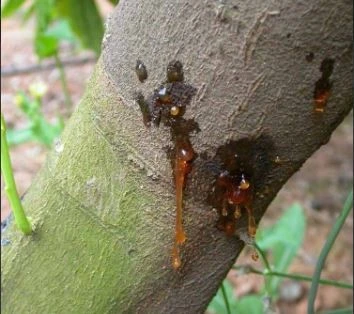
1. Gummosis (Fungal)
Causal organism: Phytophthora citrophthora
Symptoms:
The exudation of gum from the swellings (containing gum pocket) located on trunk or branches, pale green leaves and leaf shedding are the distinctive symptom of gummosis disease. Bark develop vertical cracks and lesions progressively extend along the trunk's circumference. Infected fruits develop a soft brown rot, with a characteristic pungent odor.
Control measures:
Effective management of this disease involves careful site selection (with appropriate drainage), utilizing resistant varieties, and taking measures to prevent plant injuries.
- Azoxystrobin + Chlorothalonil 56% @ 150ml in 100 liter water (1st preventive spray in February)
- Trifloxystrobin + Tebuconazole 75% @ 45g in 100 liter water (2nd preventive spray in March)
- Azoxystrobin + Tebuconazole 50% @ 65ml in 100 liter water (in case of attack)
- Azoxystrobin + Difenaconazole 32.5% @ 100ml in 100 liter water (3rd preventive spray in September)
2. Citrus Scab (Fungal)
Causal organism: Elsinoe fawcetti
Symptoms:
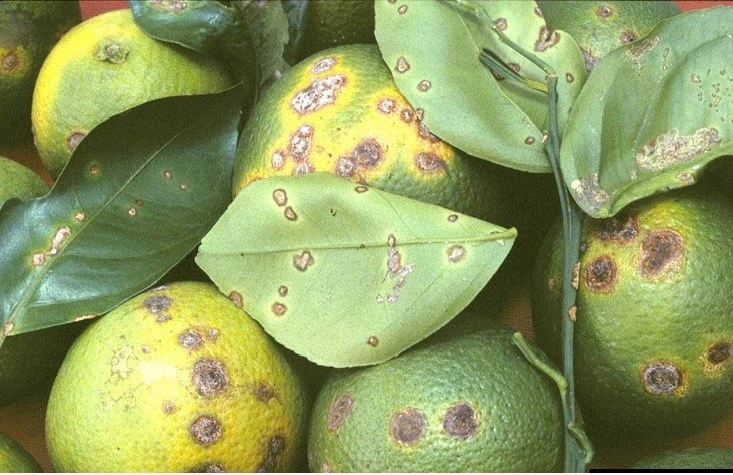
In the initial stages, the lesions develop as small semi-translucent dots on the undersides of the leaves, which eventually transform into distinct raised pustules. Leaves become distorted, wrinkly and stunted. Lesions on fruits are characterized by corky projections that result in scab-like formations. These scabs are grey or pinkish at first and become darker with age.
Control measures:
Clip off and destroy affected leaves, twigs and fruits. Spraying Bordeaux mixture, Copper sulphate or lime on the onset of spring and monsoon is quite effective.
- Azoxystrobin + Chlorothalonil 56% @ 150ml in 100 liter water (1st preventive spray in February)
- Trifloxystrobin + Tebuconazole 75% @ 45g in 100 liter water (2nd preventive spray in March)
- Azoxystrobin + Tebuconazole 50% @ 65ml in 100 liter water (in case of attack)
- Azoxystrobin + Difenaconazole 32.5% @ 100ml in 100 liter water (3rd preventive spray in September)

3. Citrus Canker (Bacterial)
Causal organism: Xanthomonas citri
Symptoms:
Plants exhibit lesions on leaves, twigs and fruits with brown, water-soaked margins. Citrus canker bacteria can infiltrate the leaves through stomata, with younger leaves being particularly vulnerable. The lesions release bacterial cells, which can be carried by the wind and dispersed to healthy plants in the surrounding area.
Control measures:
Clip off and destroy affected leaves and twigs and fruits. Apply Bordeaux paste on branches and twigs.
- Copper oxychloride + Kasugamycin 47% @ 125g in 100 liter water
4. Citrus Greening (Bacterial)
Causal organism: Liberobacter asiaticus
Symptoms:
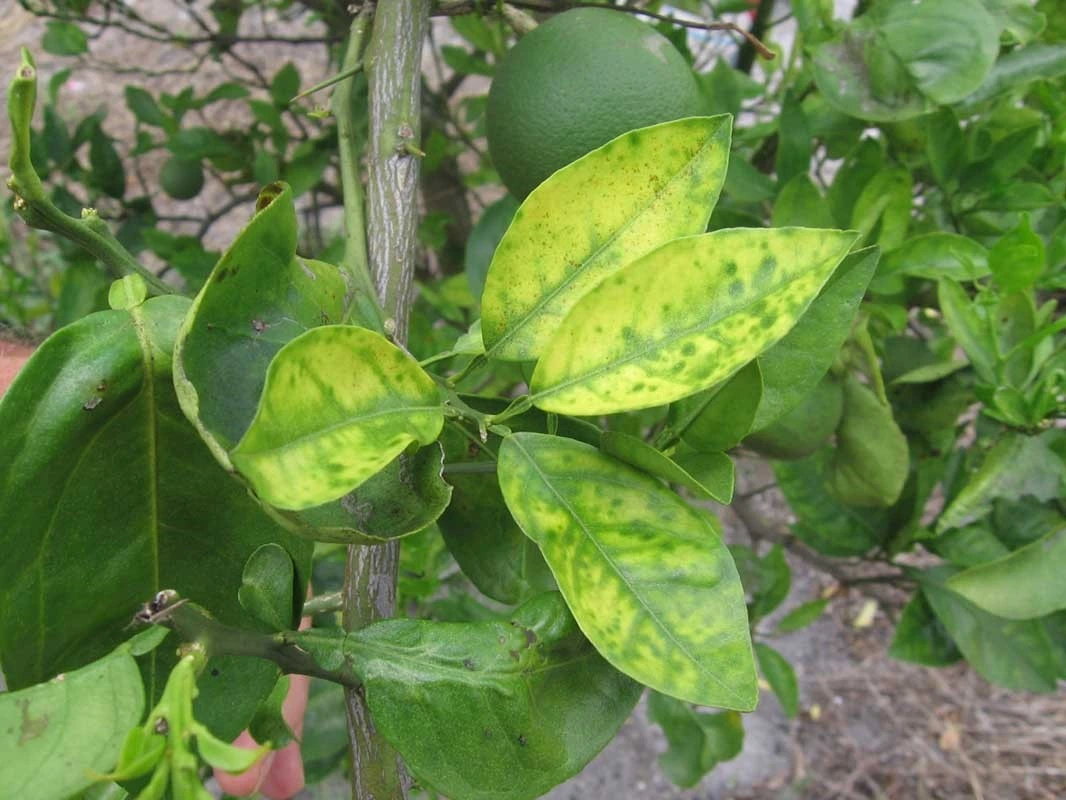
Early symptoms of this disease include irregular and patchy mottling patterns on the leaves (similar to zinc deficiency symptoms), accompanied by corking of the veins. Affected leaves tend to be small, upright, and have a leathery texture, leading to premature leaf drop. As the disease progresses, the plants exhibit severe die-back symptoms. Infected fruits are small in size and poorly colored. Disease spread ratio is high in June and July. Citrus psylla and Cuscuta weed transmit this disease from infected to the healthy plants.
Control measures:
Obtain disease resistant and healthy plants from certified nurseries and control vector population to avoid disease spread. Disease free bud-wood should be obtained from parent tree. Soak bud-wood in warm water (50 °C) for 10 minutes before grafting. Prune and burn affected branches in which leaves and fruits exhibit greening symptoms. Citrus psylla attack should be controlled by spraying Dinotefuran 20% SG @ 50g in 100 liter water or, Nitenpyram 50% SG @ 40g in 100 liter water or Clothianidin 20% SC @ 150 ml in 100 liter water, before flowering or after fruiting.
5. Fruit-end or Blossom-end rot
Reason: Calcium deficiency
Symptoms:
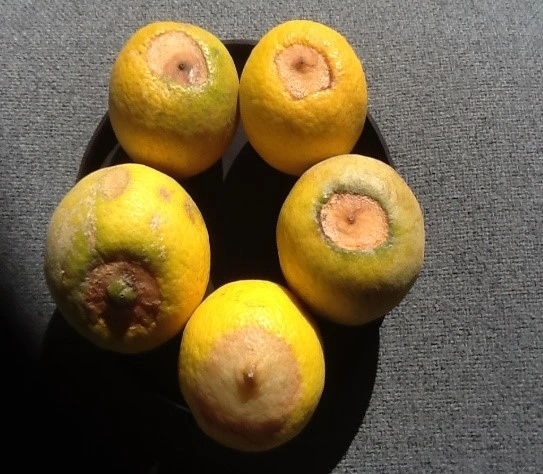
Initial symptoms include the development of small water-soaked lesions on the blossom end of the fruit. As the disease progresses the lesions expand and becomes sunken, having dark color and leathery appearance.
Control measures:
- Use calcium fertilizers at fruit developing stage.
- Spray Metalaxyl + Mancozeb 72% @ 250 g in 100 liter water.
Copper-oxychloride + Kasugamycine 47% WP
Copper-oxychloride + Kasugamycine is an innovative combination product that combines the properties of a fungicide and bactericide. Its dual mode of action makes it a strong and efficient solution for protecting crops against both fungal and bacterial diseases. It has both contact and systemic mode of action. When applied at the right time, it ensures the cultivation of disease-free crops with exceptional quality produce. Additionally, it offers extended duration control and fulfill the requirement of copper (important micro-nutrient) in plants.
Insects / pests and their management
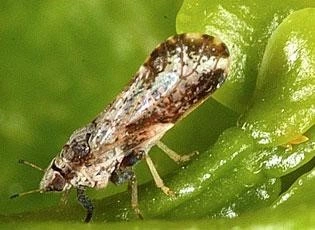
1. Citrus psylla
Symptoms:
Citrus psylla both in its adult and nymph stages, feeds on the sap of delicate plant parts such as buds, leaves, and branches, while injecting a harmful substance into them. The nymphs produce white thick sugary liquid, which can lead to the development of black sooty mold on leaf surface hampering the plant's ability to carry out photosynthesis effectively. When infestation is severe, the leaves become distorted, curl up, and eventually drop off, causing the plant to lose all of its foliage. It also acts as a carrier for transmitting the 'citrus greening' disease ETL: 5 nymph per stem.
Control measures:
Chemical control: Dinotefuran 20% SG @ 50g in 100 liter water Or Nitenpyram 50% SG @ 40g in 100 liter water Or Clothianidin 20% SC @ 150 ml in 100 liter water Or Bifenthrine 10% EC @ 250 ml in 100 liter water
-Spray before flowering or after fruiting
2. Fruit fly
Symptoms:
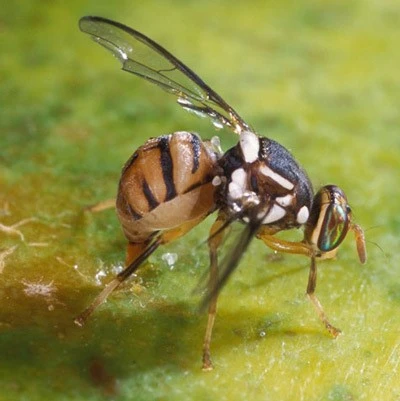
The female fly uses its needle-like ovipositor to lay eggs inside the ripening fruits. On hatching, the maggots start feeding on the fruit pulp. Infested fruits exhibit numerous dark green depression caused by the ovipositor insertion. The fruit begins to rot due to fungal and bacterial infections introduced through the puncture holes, as well as from the maggots' feeding activities, ultimately resulting in premature fruit drop.
Cultural control:
Infested fruits should be burned or buried (at the depth of 3 feet). Pheromone trap can be used for controlling male flies.
Chemical control:
Alpha cypermethrine @ 100ml/100 liter of water. Or Trichlorofon @ 250gm/100 liter of water (But its toxicity is high so it should be the least option)
-Spray before flowering or after fruiting
3. Citrus whitefly and Citrus blackfly
Symptoms:
Leaves give sickly appearance because both nymphs and adults suck the sap usually from the under surface of the leaves and excrete honeydew. The leaf surface gets coated with sooty mold due to which the process of photosynthesis slows down, which eventually leads to stunted plant growth and shedding of fruit bodies. It is also responsible for the transmission of various viral diseases.
Chemical control:
Pyriproxyfen + Acetamiprid 41.6% EC @ 200 ml/acre (in 100 liter water) Or Flonicamid 50% DF @ 80 g/acre Or Spirotetramate 240% EC @ 125 ml/acre

4. Aphid
Symptoms:
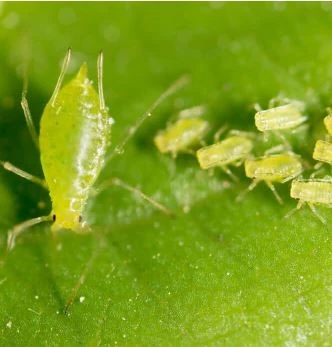
This insect has greenish color. They form colonies on the under surface of the young leaves and suck sap from leaves and shoot resulting in crinkling and curling of leaves. Honeydew excreted by the insects gives shiny and sticky appearance to the leaves. Later sooty mold grows on honey dew and leaves have a black coating.
Chemical control:
Carbosulfan 20% EC @ 500 ml/acre Or Clothianidin 20% SC @ 100 ml (in 100 liter water) Or Imidacloprid 200% SL @ 200 to 250 ml/acre
5. Leaf miner
Symptoms:
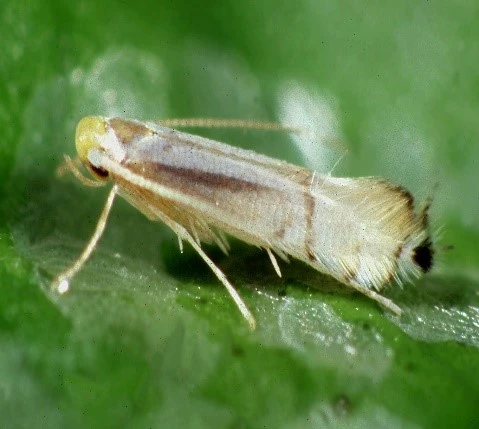
Its larva feeds on the epidermal layers of the leaf, creating serpentine mines. These mines give silvery appearance by trapping air inside. The affected leaves get distorted and give wrinkly appearance. Such leaves gradually dry and die away. Leaf miner attack also promote the development of citrus canker disease. ETL: 30% affected leaves
Chemical control:
Bifenthrine 10% EC @ 250 ml in 100 liter water
6. Thrips
Symptoms:
Thrips damage flowers, leaves, and fruits by scraping and extracting the cell sap. Affected flowers dry-up and shrivels, while leaves become tough, distorted, and wrinkled. In nurseries, thrips damage leads to stunted plant growth. Distinct symptom of thrips damage on fruits includes the emergence of silvery-white irregular patches and a circular ring around the fruit's neck. This causes fruit discoloration, resulting in decreased consumer preference for such fruits. ETL: 5 insects per leaf
Chemical control:
Abamectin 1.8% EC @ 250 ml + Clothianidin 20% SC @ 100 ml (in 100 liter water)

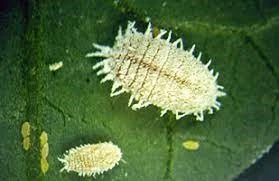
7. Mealy bug
Symptoms:
Nymphs and adult suck sap from leaves, young shoots, and fruits. In addition, they produce honeydew, which serves as a substrate for the growth of sooty mold fungus. The flowers and fruit dry-up and drop prematurely. These pests also cause harm to citrus nursery seedlings.
Cultural control:
Wrap plastic and sticky traps around stem and branches.
Chemical control:
Clothianidin 20% SC @ 100 ml (in 100 liter water)
8. Scales
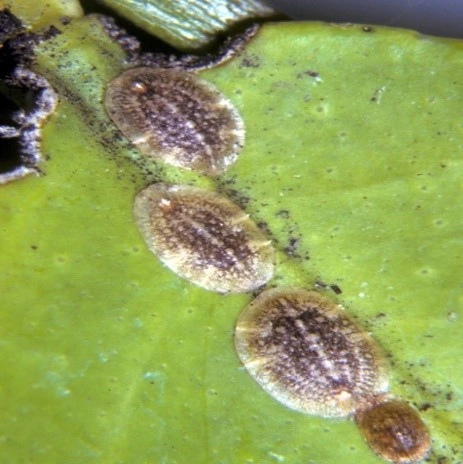
Symptoms:
Armored scales damage fruits by producing scars on its surface. Soft scales, on the other hand, secret honeydew that serves as a medium for the growth of sooty mold fungus. Soft scales become a major concern when there is limited light penetration due to overcrowding and waterlogged conditions.
Chemical control:
Bifenthrine 10% EC @ 250 ml in 100 liter water
9. Lemon butterfly
Symptoms:
Highly destructive pest. The caterpillars primarily feed on the young foliage during nursery stage, while it also targets the fresh growth of mature trees. They exhibit a voracious appetite and consume leaf lamina extensively, leaving behind the midrib. It results in the defoliated of entire tree. When fully grown, the caterpillars have a green coloration.
Chemical control:
Abamectin 1.8% EC @ 250 ml + Clothianidin 20% SC @ 100 ml (in 100 liter water)

10. Nematodes
Symptoms:
Nematodes utilize their stylet to extract sap from plants, resulting in symptoms such leaf discoloration, inhibited growth, smaller leaves and fruits, as well as the development of lesions or galls on the roots. Plants ultimately wilt and die.
Chemical control:
Carbofuran 3% @ 100 g/plant
-Apply 2 feet inside and 1 feet outside the plant canopy (mix while hoeing)

Harvesting
Picking fruits in the appropriate manner and at the right time can yield greater profits. It requires a lot of experience, effort and diligence to pick fruits without causing any damage. Fruits should neither be picked unripen nor left on the tree for too long after ripening. Care should be taken to cut the stem close to the fruit's surface using pruning shears. They should be brought down by putting them in cloth bags. After that, fruits can then be sorted and packed as needed.




.webp)
