Land Preparation and Sowing Method
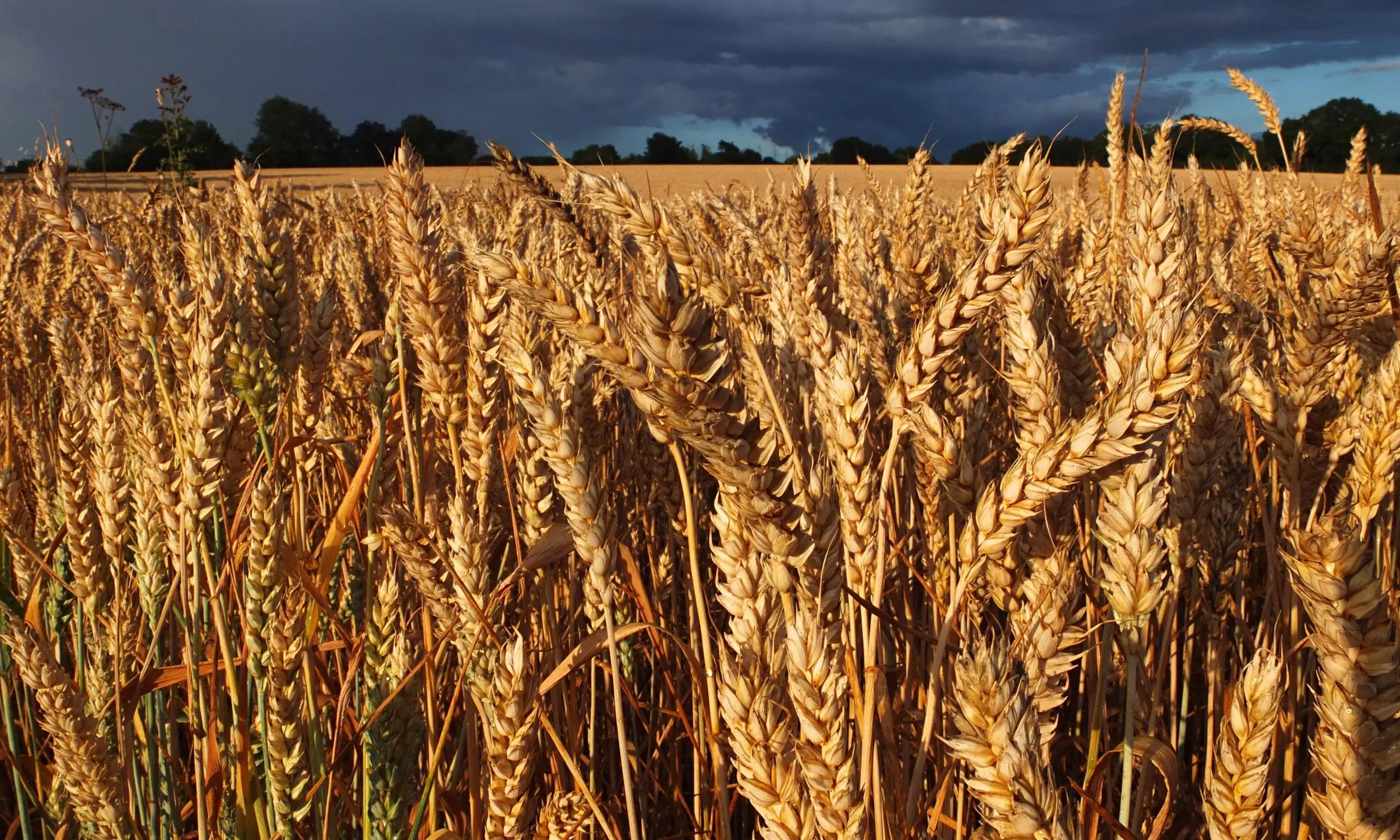
In Pakistan, wheat is cultivated in the winter or Rabi season. The wheat-growing area was 8.99 million hectares and production was 26.39 million tons in 2021-22. Higher production is needed to meet the national food requirements and make this crop more profitable for farmers. With the aim to promote best agri practices, Growtech is offering up-to-date crop advisories based on the most recent research and by using expertise of field agronomists, agri-consultants and crop advisors.
Sowing Time
The criteria for selection of sowing time based upon soil and climatic conditions and the type of cropping zones allocated for specific crops. In Pakistan, barani and humid areas require early sowing of wheat (during the month of October) before starting of winter season. While late sowing of wheat (in November) is practiced under moderate to very hot weather conditions. Best sowing time for Punjab is between 1st to 20th November. However, late sowing of wheat is also practiced in the month of December. Field studies showed that Less plant population and more weed attack is observed if crop is planted too late and early maturity is witnessed under early sown conditions due to severity in agro-climatic variations. Too early and too late sowing causes a significant decline in wheat production.
Seed selection:
When you select seeds, make sure seed is disease-free, good quality, high-yielding, recommended and of approved variety. Before sowing, seeds should be well-sorted, cleaned, and weighed at least 33 grams per1000 seeds.
Seed treatment:
Among the various diseases, Karnal Bunt (Tilletia indica), Smut (Ustilago tritici), Akheda (Fusarium foot rot) and Wheat Blast (Magnaporthe oryzae Triticum pathotype) are the most damaging and causing significant production losses if proper plant protection measures are not adopted. To control them, apply 2.5gm of thiophenate methyl per kilogram of seed or 2ml of Imidacloprid+ Tebuconazole per Kg of seed before sowing. Prefer to use rotating drum for applying chemical and if a rotating drum is not available, spread the weighted seeds and the recommended poison in a plastic bag, close the mouth of the bag, and shake it well by holding it on both sides so that the seeds should be poisoned. Make sure, the sack is about half full.
Seed rate:
| 1st November to 31st November | 40-55kg per acre |
| 1st December to 10 December | 55-60kg per acre |
Planting precision is one of the most critical step in obtaining successful wheat crop. The ideal seed depth is 1.5cm. Row-to-row 25cm and plant-to-plant 10cm spacing should be maintained. Keep plant population 9-10 lac per acre for maximum yield. The objective is to establish a crop that will have 30-35 plants per square meter area of land and with well-developed fertile Tillers. Use 60 kg seed per acre under late sown conditions (during mid-December to end of December), as low temperature will have adverse effects on seed germination and tillering capacity, so the goal is to increase the number of mother tillers. Therefore, increasing the quantity of seed to a suitable extent can make it possible to achieve better crop yield per acre.
Sowing method:
Drill sowing:
In this method, seed is sown by seed drill. With the help of this implement, seed placement is done at proper depth and results in uniform germination and even plant stand establishment. This method is recommended for well drained, clay loam and sandy loamy soils.
Bed sowing:
In this method, raised beds are prepared with a bed planting machine by following the conventional land preparation. This method is recommended as it increases water use efficiency and avoids the impact of excessive water under rain fed conditions. Bed sowing should be preferred under loam and well drained soils.
Broadcast:
In this method, seeds are scattered by hand on well prepared field followed by covering with wooden plank or harrow for contact of seed with soil. However, the seeds are not uniformly distributed in the field. This method of sowing is very inefficient and should discouraged. Germination of broadcast seeds is relatively poor and the plant stand is often irregular and non-uniform rooting depth is attained; the main reason for crop lodging at later growth stages and during maturity. Such crop can't be harvested with combine harvester and thus hinders smooth harvesting operations badly. Wastage of broadcasted seed also results because most of the seeds are left on the soil surface where they can't germinate and may, therefore, be picked up and eaten by birds. This method is recommended for all types of soils; loam, sandy loam, and clay loam.
Broadcast augmented with furrows:
In this method, seed is spread manually and then furrows are made by tractor-mounted ridger. It also enhances crop yield as more surface area is available for plants which lowers plant competition and enhances interception of solar radiation resulting in more photosynthesis rate. This method can be recommended in clay loam or heavy loam soils, or in rain fed areas as well.
Ridge sowing:
In this method, seed is sown on both sides of 60 cm apart ridges with the help of hand (manually). It is recommended in saline and water logging soils.
Zero tillage:
In this method, direct sowing of wheat is done in rice fields without ploughing. This helps advance wheat sowing as the time required for field preparation is saved. This method can be employed in loamy and clayey soils having good drainage and moderate water holding capacity. Zero-tillage can be adopted with following preparations. At the time of sowing there should be proper moisture in the field. Rice should be harvested near the ground and the left over stubbles should not be more than 15 cm in height and field should be free from weeds. At the time of sowing, the seed-drill should be lifted up or lower down very slowly to avoid clocking of furrow opener by soil, otherwise seeds and fertilizer will not be drilled in the furrow. Fungicide treated seed should be used. Seed rate should be 140-150 kg/ha (20-25% higher). Sowing depth should be maintained at 5-6 cm. Light planker may be used behind the zero-tillage machine. After sowing of the crop, other package of practices remain the same as in other methods.
Approved Varieties of Wheat:
Punjab:
| Irrigated area | Barani area | South area |
|---|---|---|
| Arooj-22 | Arooj-22 | Gold-16 |
| Dilkash-21 | Ihsan-16 | Johar-16 |
| Fakhr-e-Bakhar | MA-21 | Borlag-16 |
| Zinkol-16 | Fateh jang-16 | Ujaala-16 |
| Bhakkar star | Markaz-19 | Aaas-11 |
| Borlaag-16 | Barani-17 | Akbar-19 |
| Ghazi-19 | Pakistan-13 | Ghazi-19 |
| Akbar-19 | BARS-9 | Sadiq-21 |
| Anaj-17 | Nawab-21 | |
| MH-21 | ||
| Subhani-21 | ||
| NARC super |
Fertilizer Management
The quantity of fertilizer required by the crop always depends on the crop to be sown, the previous crop, the organic manuresapplication, the crop variety, yield potential and management level. The use of site specific recommendations by farmers is negligible. Farmers may also apply fertilizers according to their financial resources, the availability of water, the types of fertilizers available and the expected financial returns. Fertilization on the bases of soil analysis is the most appropriate key to get maximum output by managing the inputs. Growtech highly recommends growers to go for soil analysis via satellite smart technology to optimize the inputs with significant reduction in input cost.
GROWTECH recommends crop specific fertilizer application based upon the soil available nitrogen and fertility status in balanced amount to achieve better crop growth and 15-20% higher yield.
- Use nitrogenous fertilizer in 2-3 splits.
- If phosphorus fertilizer is not applied at sowing time it should be applied at first irrigation.
If alternatives to Diammonium Phosphate (DAP) fertilizer like Single Super Phosphate (SSP) or Nitrophos are to be used their recommendation are as follows:
Use of Single Super Phosphate (SSP):
Add 3 to 4 bags of SSP (Single Superphosphate), half bag of urea and 1 bag of SOP (Sulphate of Potash) per acre at the time of land preparation.
Use of Nitrophos (NP):
Add one bag of nitrophos, 1 or 1.5 bag of Single Super Phosphate and one bag of Sulphate of Potash per acre at the time of land preparation. Apply one bag of nitrophos and one bag of urea at the first irrigation, this can significantly increase crop yield.
Use of Bio-organic-Phosphate (BOP):
BOP or bio-organic-phosphate is also a good source of phosphorus fertilizers. It contains 20% phosphorus as well as 15% organic matter and Billions of phosphorus-solubilizing bacteria (PSB). Rock phosphate present in BOP can provide P up to 90 days of for plants and also solubilizes the fixed amount of phosphorus in the soil, which increases the yield by making more P available to Plants. Minimize the DAP quantity by adding 2 bags of BOP per acre in wheat.
Use of Zinc:
Applying 27% zinc sulphate 6 kg per acre or zinc sulfate 10% 10 liters or zinc 5% (EDTA chelated) 2 kg per acre with one bag of urea at first irrigation to meet the nutritional requirements of the crop. An increase of up to 15% in wheat yield per acre may be possible. The application of zinc leads to an increase in chlorophyll as well as enhances vegetative growth. Zinc helps wheat crop to get maximum fertile tillers. Note: A gap of 15-20 days is mandatory between the use of phosphorus and zinc. Chelated zinc can be used with phosphorus.
Use of Boron:
Boron deficiency has not been observed in soils irrigated by canal water and pH less than 8, but boron deficiency is a problem in sandy and saline soils. Boron is present in saline soils, but not available to plants. In case of boron deficiency, fertilization process will be disturbed leading to reduction in grain number and size. To solve these problems, apply 3 to 4 kg of boron (gold boron or boro star) at the time of land preparation. Otherwise, 2 foliar applications of boron 20% @ 125 grams or boron 5% @ 500 ml per acre with an interval of 15 days is very useful to get maximum yield.
Use of Potash:
Potash application plays a critical role in wheat crop. An increase in the length of the stalk, increase in number of grains, higher grain weight as well as improvement in color and taste are due to potash. Thus can be applied to the crop anyone from the following ways:
| Fertilizer | Quantity per acre | Time and method of application |
|---|---|---|
| SOP | 50 kg | At the time of sowing |
| SOP (WP) | 12.5 kg | Flood at the booting stage |
| Potash 30% (Liquid) | 10 litter | Flood at the booting stage |
| Potash 30% (Foliar grade) | 1 litter | Spray at the booting stage |
Use of Potassium humate:
Soils of Pakistan suffer from organic matter deficiency. Yields can be increased by using potassium humate as a soil conditioner.
- Supports the tillering process.
- Solubilize fix phosphorus in the soil, making available to plants.
- Roots are dense and better nourished by its application.
- Make soil pH more crop-friendly.
- Make the crop green by enhancing photosynthetic activity.
- Improves the uptake of micronutrients by working as chelating agent.
Flood at 5-10 liters per acre with 1st of 2nd irrigation by mixing with urea.


Note: The use of calcium, amino acids, and biostimulants at last irrigation in wheat enhances resistance to terminal heat stress.
Irrigation
The potential water requirement range of wheat is 271-515mm
Four irrigations are sufficient for wheat.
1st irrigation should be applied at Tillering stage (20-25 days after sowing).
2nd irrigation should be applied at stem elongation stage (45-50 days after sowing).
3rd irrigation should be applied at booting stage (80-95 days after sowing).
4th irrigation should be applied at milking stage (105-115 days after sowing).
Note: Depending on the soil texture and weather conditions, the timing and number of irrigations can be varied. Apply first irrigation 30-35 days after sowing to wheat grown after rice (wheat growers should not miss this application). If there is lack of water don't apply irrigation at the stem elongation stage but at tillering stage on priority.
| Critical stages | Irrigation Interval |
|---|---|
| Tillering | 20 -25 days after sowing |
| Stem elongation | 45-50 days after sowing |
| Booting | 80-95 days after sowing |
| Milking stage | 105-115 days after sowing |
Weeds Management
Mode of Damage:
- Competition for Nutrients
- Competition for moisture
- Competition for light
- Competition for space (CO2)
- Allelopathic Effect
- Serve as reservoirs of pests and diseases
Non-chemical control:
Follow crop rotation, and cultivate fodder barseem, etc. after two to three years on wheat fields.
Important instructions:
Never use weeds as fodder after spraying. Do not spray in strong wind, rain or fog. Use clean water to spray. Use a (flat fan or T-Jet) nozzle as a standard practice for spraying. Maintain 120 liters of water per acre. Always spray weedicides when the soil has drained completely and in more dry condition (at least below field capacity level and less wet). Spraying is advised to be followed after calibration of machine.
Chemical control:
Follow crop rotation, and cultivate fodder barseem, etc. after two to three years on wheat fields.
Dual nature herbicides:
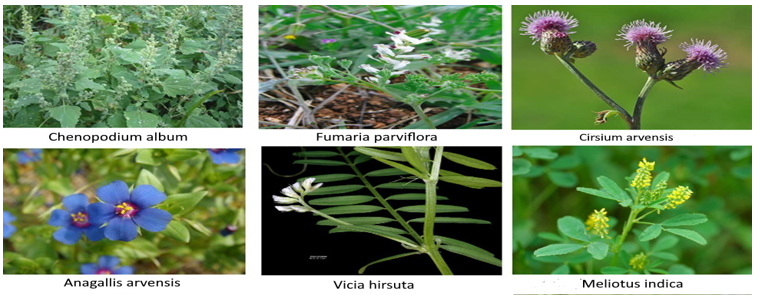
These chemicals can be used to control broad-leaved and narrow-leaved weeds. Both broad and narrow leaved weeds can be controlled by spraying Atlantis Super @ 100 gm/acre and Bactral Super @ 250-300 ml/acre (tank mixture) on the crop after 35 to 40 days. Note: Atlantis Super is not suitable for sandy and saline soils.
For Phalaris minor and Avena spp:
Mesosulfuron 3% OD @ 160 ml or Sulfosulfuron 75% @ 13.5 gm WDG by mixing in 120 liters of water.
For other Broad leave weeds:
Fluroxypyr meptyl+ MCpa 50% Ec @ 350 ml in 120 liters of water or Bromoxynil+MCpa 40% EC @ 500 ml/a or Fluroxypyr Meptyl + Florasulam + MCPA Isooctyl 48% @SC 300 ml by mixing in 120 liters of water.
For narrow and broad leaves:
Mesosulfuron Methyl + Florasulam + MCPA Isooctyl 25% OD @ 400 ml or Florasulam + Mesosulfuron Methyl + Fluroxypyr-Mepty 26% OD @ 150ml by mixing in 120 liters of water.
Diseases and Their Management
1. Black Rust or Stem Rust of Wheat:
Symptoms
- The early symptoms appear in the form of elongated, reddish-brown pustules, primarily on stem, followed by leaf sheaths, lamina and floral parts. Since the stem is most severely attacked.
- These pustules of uredia contain several uredospores. The uredial pustules enlarge, merge with each other, rupture the host epidermis and finally expose several uredospores.
Control measures
Azoxystrobin+ Tebuconazole 50% @100ml/acre Or Trifloxystrobin+ Tebuconazole 75% @65 gram/acre

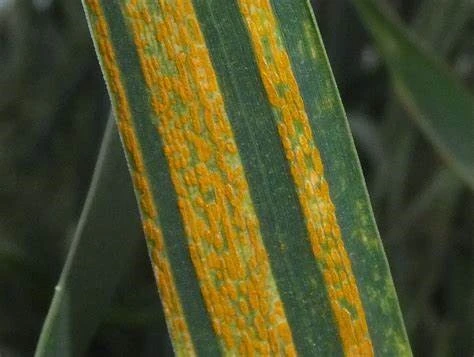
2. Yellow Rust or Stripe Rust of Wheat:
Symptoms
- In early stages, long streaks appear first on leaves and then on leaf sheaths, stalk and glumes. These streaks contain rows of uredosori.
- In each row, the pustules are oval in shape.
- Telia or teleutosori develop only rarely. If present, lemon-yellow in colour. They are arranged in rows they are small, oval to linear and black coloured, or stripes, hence called 'stripe rust'.
Control measures
Azoxystrobin+ Tebuconazole 50% @100ml/acre Or Trifloxystrobin+ Tebuconazole 75% @65 gram/acre
3. Loose Smut of Wheat:
Symptoms
- Flowers in the ear are replaced by black powdery mass of spores.
- Glumes and all other floral parts are entirely replaced by spores.
- Only the inflorescence axis, ends of glumes and awns remain in the entire inflorescence. All other parts are replaced by spores.
Control measures
Seed treatment With thiophanate methyl 2g/kg seed.

4. Brown Rust or Orange Rust of Wheat:
Symptoms
- Round or oblong, orange coloured pustules are irregularly distributed on leaves. They are very rarely found on leaf sheaths and stem and never occur in rows or stripes.
- The pustules are bigger than that of yellow rust.
- The uredosori burst usually on upper surface of leaves.
Control measures
Azoxystrobin+ Tebuconazole 50% 100ml/acre Or Trifloxystrobin+ Tebuconazole 75% 65 gram/acre

5. Karnal Bunt of wheat:
Symptoms
- Symptoms appear only when the grains develop.
- The pathogen affects grains partially and the infected portion of the grain is converted into black shooty mass of spores.
- In badly infected spikelets, the glumes spread apart and quite often fall off on to the ground.
Control measures
Azoxystrobin+ Tebuconazole 50% 100ml/acre Or Trifloxystrobin+ Tebuconazole 75% 65 gram/acre

6. Foot rot of wheat:
Symptoms
- Most common early symptoms are dark brown streaks on seedling leaf sheaths as shown above.
- As the infection progresses, these become water-soaked at stem bases and extend up the first internode.
- Infections at the ligule then transfer mycelium onto newly emerging leaves, and the fungus is transferred up the growing plant.
Control measures
1000 gram/acre flooding of Thiophenate methyl 70%.

7. Powdery mildew:
Symptoms
- Powdery mildew appears as fluffy, white powdery growth of fungal spores on the leaf surface and in conducive conditions on awns and glumes of the head.
- Early symptoms can appear as yellow flecks on leaves before mycelial growth occurs.
- Symptoms typically progress from lower to upper leaves, though infection can occur at any stage through the season where WPM spores are present and conditions allow.
- Rapidly growing tissue is more susceptible to infection and as such plants at early growth stages and following nitrogen application are typically more susceptible to greater severity of infection.
Control measures
1000 gram/acre flooding of Thiophenate methyl 70%.

Insects / Pests and Their Management
Termites:
Symptoms:
- Attack on plant roots.
- Affected plants turned into yellow color.
- Sever attack cause death of plant.
Control:
Fipronil 5% SC 960 ml/acre flooding.

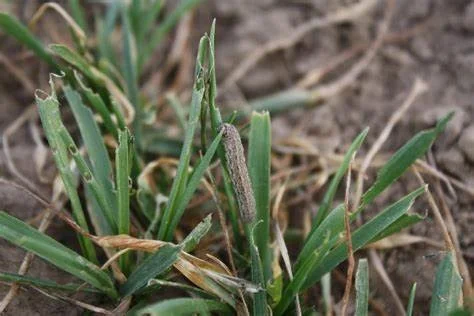
Cut Worm:
Symptoms:
- Attacks on Seedling,
- Cut the plants above from the ground surface.
Control:
Spray bifenthrine 10% EC 400 ml/acre
Aphid:
Symptoms:
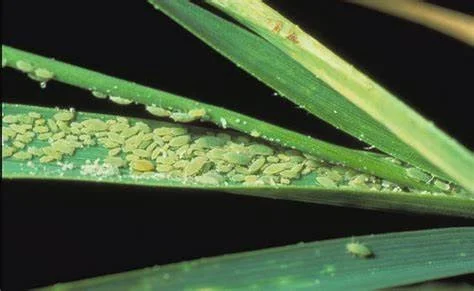
• Adult and nymph aphids suck sap with large populations limiting grain yield and size, especially winter and spring infestations. The following pertains to feeding damage from oat aphid (Rhopalosiphon padi) and corn aphid (Rhopalosiphon maidis) in the absence of virus and information on feeding damage from Russian wheat aphid (Diuraphis noxia).
Control:
Carbosulfan 500 ml/acre Or Clothianidin 200 ml/acre
Pink Borer:
symptoms
- The caterpillars bores into stem and feeds upon tissues of the central shoot.
- In affected plants, grain formation process is stopped.
Control:
Fipronil 5% SC 960 ml/acre flooding.

Harvesting
Harvesting is carried out when leaves and stem turn yellow and become fairly dry. To avoid loss in yield crop should be harvested before it is dead ripe. Timely harvesting is needed for optimum quality and consumer acceptance. The right stage for harvesting is when moisture in grain reaches to 25-30%. For manual harvesting use serrate edge sickles. Combines harvester are also available which can do harvesting, threshing and winnowing of wheat crop in single operation.





.webp)
