Lucerne Production Plan by GROWTECH
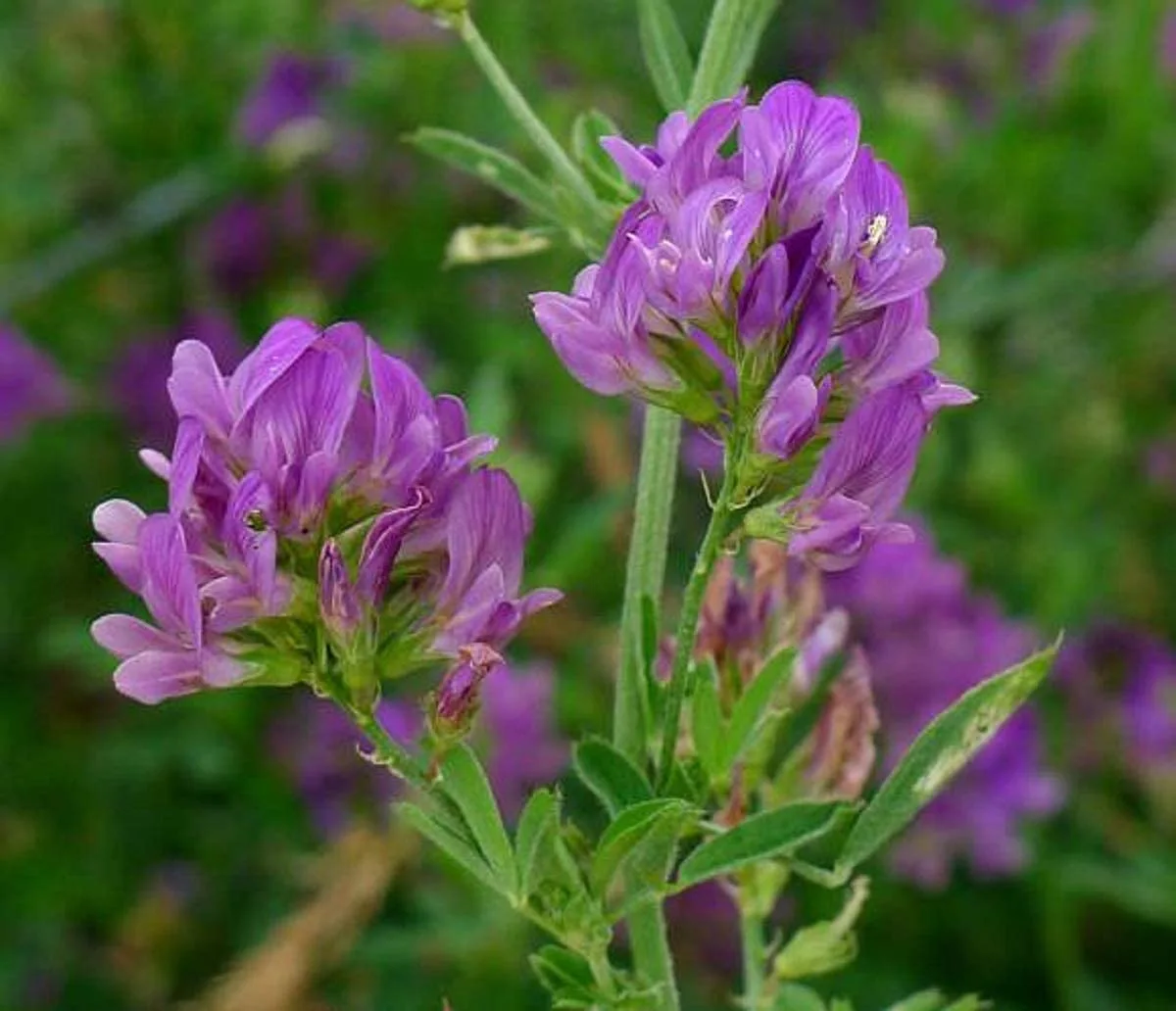
The protein-rich fodder lucern, also known as alfalfa, is considered as the "queen of fodder crops." It is a perennial plant that can produce fodder for three to four years while still growing. In addition to protein, it provides a significant source of calcium and minerals. It is a tasty green feed that contains 20–30% fiber and 16–25% crude protein. The origin of lucern lies in South-West Asia. It is a resilient leguminous crop that can tolerate drought.
Soil Type:
It can be cultivated on variety of soils but it gives best result when grown on deep and well drained loamy soils. Avoid waterlogged, alkaline and heavy soils for its cultivation.
Land Preparation:
Two to three ploughings followed by planking are necessary to prepare a fine seed bed.
Time of Sowing:
Best time for lucern sowing is 15th October - 15th November.
Seed Rate:
For Drill sowing 4 to 6 kg seed/acre and for broadcasting 6 to 8 kg seed is required.
Approved Varieties
| Sr. No. | Variety Name | Sowing Time | Recommended Areas | Salient Features |
|---|---|---|---|---|
| 1 | Sargodha Lucerne | For Fodder Mid October–Mid November For Seed Mid October–Mid November |
Sargodha, Faisalabad, Bahawalpur, Bahawalnagar, Multan, Layyah, Bhakkar, Rajanpur, Sadiqabad, R.Y.Khan |
• Multicut, abundant tillering capacity, high fodder yielding, long duration, wider adaptability, and rich in protein • It stays in the field for 5-7 years with one time sowing and gives fodder yield during whole the year • It gives 130 t/ha green fodder yield |
Recommended Fertilizer
- Apply one and a half bags of DAP and a half bag of urea fertilizer at sowing time.
- Use one and a half bag of DAP in October every year.
- Nitrogenous fertilizer can be applied after each harvest i.e use half bag of nitrogenous fertilizer after each cutting.
Irrigation
- Depending upon climatic conditions and soil type decide amount and frequency of irrigation.
- Apply first irrigation immediately after sowing then depending upon crop and weather condition apply irrigation with interval of 10-15 days.
Weeds Management
Because lucerne is a perennial crop, in case of weed infestation the row crop should be ploughed before being set aside for seed purpose. Lucern seed crop is being infested by khabal grass and it-sit weed.
Chemical Control:
For controlling it-sit weed take spray of Pendimethalin @1.5 liters / acre one and a half month before crop sowing and irrigate the field.
Diseases and their Management
1. Anthracnose of Lucerne:
Initially, small elongated, light brown spots appear on stem and flowering shoots. Later on spots get darken, extend and penetrate to pith. Wilting of leaves and inflorescence is observed which ultimately lead to scorchy appearance of crop and inhibition of seed head development.
Chemical control:
Spray Diafenoconazole @ 1cc/liter of water or Sulfur @ 2g/ liter of water after harvesting the crop.
2. Root rot and wilt of Lucerne:
Irregular, brown rotting lesions appear in localized patches on roots and crowns of plant. Occurrence of root rot disease in cold climate and Wilt in warm climate, mycelium grows in ruptured tissues which leads to disintegration of roots and lower crown.
Chemical control:
Flooding of sulfur @2kg/acre.
3. Leaf Spot:
Affected plant turn yellow and leaves gets drop off. If infestation is observed, take spray of Mancozeb @ 2g/1 liter of water.
Insect/pest and their Management
Army worm:
It attacks on crop in group and Scrapping the epidermal layer, leaving the skeleton of veins of leaf. During severe attack only stem and side shoots will be standing. Larva is of greenish color. They target floral buds as well as foliage. The attack begins in February or March.
Chemical control:
In case of severe infestation, spray Flubendiamide @25 ml/ litre, Chlorantraniliprole @ 40 to 50 ml/ litre, or Lufenuron @ 200 ml per acre after harvesting.
American worm:
Eating leaves, damage the plant and puts holes in it. In case of serious infestation, spray 25 ml of Spinosad or 40 to 50 ml of Chlorantraniliprole/ litre of water or Emamactin Benzoate 1.9 EC.
Alfalfa Weevil:
Leaves and newly sprouting branches are more susceptible to attack. They eat the green part of the leaves. It is advisable to cut down the crop early to avoid being attacked.
Harvesting and Postharvest
Harvesting of lucerne should be stopped by the end of March in order to obtain its seeds. Lucerne seeds are valuable, therefore special attention should be given to its cutting, handling, and care. Avoid cutting of immature crop, harvesting should be done in the morning to minimize seed damage. After threshing, seeds should be stored in a cool dry and ventilated place either in cloth bags or in jute sacks.




.webp)
