Land Preparation and Sowing Method
Sorghum (Sorghum bicolor L.) belongs to family Graminae, locally known as jawar and is grown as a fodder crop in Pakistan. It is multi-use cereal; contain grains, forage and sweet types. It is dual purpose crop of kharif-season. Sorghum is a warm-season, short-day annual grass. The importance of sorghum is increasing in industry, instead of its raw consumption. Sorghum is a valued industrial raw material such as processed animal feed, bird feed, sweet sorghum alcohol, syrup, processed foods, malt/brewing and forage. Punjab and Sindh are the major sorghum producing provinces of Pakistan, contributing 47% and 26% respectively.
Land Preparation:
Deep ploughing is best for cultivating the soil for sorghum cultivation. Two to three deep ploughings followed by planking are necessary for preparing the land. If there are any residues of the previous crop, then rotavate the soil once. Well pulverized soil is the key to good crop production. Use of cultivator that can cut and invert the soil is recommended to make soil well pulverized.
Time of Sowing:
Fodder Sorghum: March to September
Seed Sorghum: July month
Row to Row Distance: For sowing use spacing of "45 cm x 15 cm" or "60 cm x10 cm.
Sowing Depth: Seed should not be sown more than 2-3 cm deep.
Method of sowing:
To get good crop stand and fodder production broadcasting of seed should be followed by ridge making. Keep a spacing of one and a half (1.5) to two feet (2) between the rows and a spacing of six to eight inches (6-8) between the plants in crop sown for seed purpose. In arid areas, the seed rate can be increased while considering the soil's moisture level.
Row to Row Distance: Row to row spacing 15 cm.
Plant to Plant distance: plant to plant spacing should be 7.5 cm.
Seed Rate:
Fodder Sorghum: 35 to 40 kg/acre
Seed Sorghum: 6 to 8 kg/acre
Note: The seeds should be healthy. Before sowing, treat the seeds with recommended fungicide.
Approved Varieties of Sorghum
Use healthy seed of improved & certified varieties of sorghum.
Recommended Varieties of Sorghum in Irrigated areas of Punjab
| Sr. No. | Variety Name | Year of Release | Sowing Time | Potential Yield (Maund/Acre) | Recommended Areas | Salient Features |
|---|---|---|---|---|---|---|
| 1 | Sorghum-2011 | 2011 | For Fodder March-August For Seed July |
708.50 | Sargodha, Sahiwal, Khanewal, Faisalabad, Bahawalpur, R.Y.Khan, Mianwali, Bhakkar, Leyyah, Attock, Jehlum, Rwalpindi, Gujrat, Gujranwala | ● Tall, high fodder yielding, low HCN level, long duration and wider adaptability ● It gives 70 t/ha green fodder yield |
| 2 | JS.2002 | 2002 | For Fodder March-August For Seed July |
607 | Sargodha, Sahiwal, Khanewal, Faisalabad, Bahawalpur, R.Y.Khan, Mianwali, Bhakkar, Leyyah, Attock, Jehlum, Rwalpindi, Gujrat, Gujranwala | ● Tall, sweet, high yielder, long duration and tolerant to insect pests and diseases ● It gives 60 t/ha fodder yield. |
| 3 | Hegari | 1975 | For Fodder March-August For Seed July |
556.68 | Sargodha, Sahiwal, Khanewal, Faisalabad, Bahawalpur, R.Y.Khan, Mianwali, Bhakkar, Leyyah, Attock, Jehlum, Rwalpindi, Gujrat, Gujranwala | ● It is tall, sweet, late maturing, high yielder and dual purpose. It gives 55 t/ha green fodder yield. |
| 4 | JS-263 | 1968 | For Fodder March-August For Seed July |
Sargodha, Sahiwal, Khanewal, Faisalabad, Bahawalpur, R.Y.Khan, Mianwali, Bhakkar, Leyyah, Attock, Jehlum, Rwalpindi, Gujrat, Gujranwala | ● It is high fodder yielding, sweet and dual purpose variety. Its fodder yield potential is 50 t/ha. |
Recommended Variety of Sorghum in Barani areas of Punjab
| Sr. No. | Variety Name | Year of Release | Sowing Time | Potential Yield (Maund/Acre) | Recommended Areas | Salient Features |
|---|---|---|---|---|---|---|
| 1 | Chakwal Sorghum | 2008 | July- August | 450 | Barani Areas of Punjab | ● High Yielding ● Short Duration ● Uniform Maturity |
Fertilizer Management
GROWTECH recommends crop-specific fertilizer application based upon the soil available carbon, nitrogen and fertility status in balanced amount to achieve better crop growth and 15-20% higher yield.
- Following are the recommendation for average fertile soils for one acre.
Nutrient Quantity kg/acre and Use Fertilizer Bag /acre
| Crop | Nitrogen | Phosphorus | Potassium | Sowing Time | 1st Irrigation | 2nd Irrigation |
|---|---|---|---|---|---|---|
| Fodder | 32 | 23 | 12.5 | 1 Bag DAP + Half bag SOP | 1 Bag Urea | 1 Bag Urea |
| Seed | 20 | 23 | 20 | 1 Bag DAP + Half bag SOP | 1 Bag Urea | 1 Bag Urea |
Note: Nitrogen fertilizer can also be applied with second irrigation, depending on the crop's requirement.
- Hybrid varieties require relatively more fertilizer, so use fertilizers according to the crop's need.
Sorghum crop typically requires irrigation 3 to 4 times throughout its growth cycle. First irrigation should be done three weeks after sowing, based on the weather conditions, and the subsequent irrigations should be done as needed. For crops raised for seed purpose, it is important to avoid water stress during the seed formation stage to prevent reduced yields and compromised seed quality due to shriveled grains. irrigations should be done as needed. For crops raised for seed purpose, it is important to avoid water stress during the seed formation stage to prevent reduced yields and compromised seed quality due to shriveled grains.
Important Note:
If the height of the forage crop is less than three feet and it is suffering from water scarcity, it should not be fed to livestock because in this condition it produces a poisonous substance called Hydrocyanic acid (HCN) which is extremely harmful to animals. Therefore, it is necessary to irrigate the crop before using it as fodder.
Weeds Management
Crop grown for seed purpose should be free from weed infestation. Different types of weeds, such as it-sit grass, wild melon (Tandla), Johnson grass (Swanky), and others can be a problem. Use recommended herbicides to control them. For weed control in sorghum, Atrazine can be applied at a rate of 500 ml/ acre.

madhana

Swanky
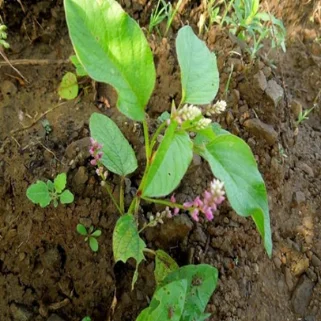
Tandla
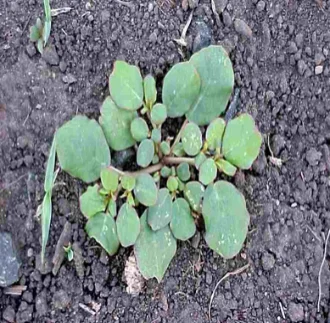
It-sit
Sorghum Diseases and their Management
| Diseases | Symptoms & Control |
|---|---|
| Anthracnose | Small red color spots with white center are observed on both sides of leaves. Spray Kasugamycine+ Copper oxychloride at the rate of 250 grams per acre. |
| Rust | Can be observed at any growth stage of crop. Small reddish brown flecks observed on lower surface of leaves. Grow rust resistant variety or spray Mancozeb@250gm/150Ltr of water or do dusting of Sulphur@ 10kg/acre should be done. |
| Downy Mildew | Whitish growth is observed on lower surface of leaves. The leaves give green or yellow coloration appearance. Use downy mildew resistive varieties. |
| Leaf Blight | In initial stage small narrow elongated spindle shaped spots are observed. Use disease free seeds and resistive varieties. Follow proper crop rotation. |
| Grain Smut/Kernel smut | Appeared at time of grain formation in ear. Grains gives dirty white or grey color appearance and get covered with white cream. Use diseased free seeds and resistive varieties |
Insect/ pest and their Management
| Insect/pest | Pesticide | Recommended Dose | |
|---|---|---|---|
| 1 | Shoot Fly | Clothianidin 20 % SC | 200 mL |
| 2 | Stem Borer | Fipronal 5 % SC | 960 mL/ acre |
| 3 | Fall Army worm | Abamectin + Chlorfluzoran (5 %) EC | 350 mL/140 L water |
| 4 | Pyrilla | Chlorpyrifos 40% EC | 2 L/acre flooding |
| 5 | Mites | Abamectin 1.8 % EC | 40 mL/acre spray |
Harvesting
Crop should be harvested when 50% of the flowers bloomed. A few days before harvesting, irrigate the crop to increase the yield. When the seed-bearing crop ripen, harvest the seeds and store it in a dry place. Once they are dry, separate the seeds from the straw using a thresher, and store the dry straw in bales. These bales can be used as feed for animals during winter.




.webp)
