Tomato Production Plan By Growtech
Importance:
The tomato is a vegetable that is consumed all year long and holds a significant position among vegetables in terms of their high nutritional value. Tomatoes provide sufficient amount of vitamin A, B, and C as well as mineral salts like calcium, iron, and phosphorus to create blood in addition to helping in immunity of body. Lycopene, which is found in tomatoes, aids in the body's waste removal. Tomatoes are used to make products including pulp, ketchup, and paste. It is also simple to grow in households.
Favorable climatic condition:
Tomato is one of the summer vegetables. Tomato plants cannot tolerate extreme heat or cold. The Optimum temperature for its growth is 14 to 30 degrees Celsius. Tomato cultivation is closely related to climate as plants cannot tolerate extreme heat or cold. The optimum temperature for tomato plant growth is 14 to 30 degrees Celsius.
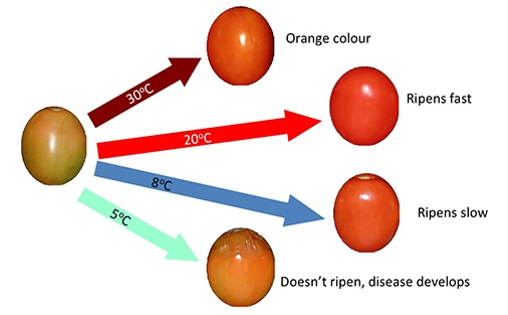
Temperature requirement at different stages
| Growth stage | Temperature |
|---|---|
| Germination | 16-29 oC |
| Stem elongation | 21-24 oC |
| Fruiting Days | 14-17 oC |
| Fruiting Night | 19-24 oC |
| Red color formation | 20-24 oC |
Time of sowing:
Tomato crop is cultivated in both hilly and plain areas. Its prominent cultivation areas are Khushab, Gujranwala, Sheikhupura, Muzaffargarh, Khanpur (Rahim Yar Khan) etc. Four crops of tomato are cultivated in the plains of Punjab, while the fifth crop is cultivated in the mountainous regions. In Punjab, the area under February cultivation is increasing, as a result of which the arrival of tomatoes increases in May and the farmers suffers financial losses due to low rates of fruit in Market. Moreover, the production of February cultivation is relatively less due to the warm weather, so it is important to promote November cultivation under Tunnel (polythene sheets).
| Crop | Time of nursery Sowing | Transplantation | Harvesting | Area |
|---|---|---|---|---|
| First | July-August | August, September | September, October, November | Chakwal |
| First | August | September | November, December | Khanpoor (Rahim yar Khan) |
| Second | August-September | September-October | January to March | Khushab |
| Third | Mid-October | End-November | February to April | Southern Punjab |
| Fourth | Mid-November | Start of February | April to June | Central Punjab |
| Fifth | Mid-March | End December | July, August | Mountain regions |
It is important to protect the crop from frost. Tomatoes cannot tolerate severe frost. Nursery must be protected with plastic tunnel covers.
Varieties

| Variety name | Description |
|---|---|
| TO-1057 |
• Resistant against viruses and diseases • Excellent productivity • Hard outer fruit skin so more shelf life • Average fruit weight 90 to 100 grams • Ready for harvesting 85 to 90 days after transfer to field. • Excellent shelf life • 50 grams of seed per acre |
| T-1359 |
• Mature earlier than other varieties due to fast growth potential • Ready for harvesting in 80 to 90 days after transplantation. • Average fruit weight 80 to 90 grams • Hard skin • Excellent immunity against diseases |
| TO-6242 |
• Excellent Resistance against viruses and diseases • Excellent productivity • Average fruit weight 100 to 120 grams • Fruit has a tough skin and excellent shelf life • Ready for harvesting 85 to 90 days after transplantation. • Excellent immunity against weather conditions • Use 50 grams of seed per acre for sowing |
| 1554 |
• Average fruit weight 130 to 160 grams • Ready for first picking in 60 to 70 days after transplantation. • Excellent variety in production • The skin of the fruit becomes hard after ripening. • Improved Resistance against viruses and heat • Best shelf life of fruit |
| Sahil-F1 (Recommended for tunnel cultivation) |
• The fastest growing variety of fruiting varieties • Plant height over 8 feet • The plant is capable of producing 8-10 fruiting branches • Hard skin fruit • Average fruit weight up to 150 grams • Immunity against viruses and similar stresses. • Picking begins 60 to 70 days after Transplanting |
| Fonto |
• All hybrids grow 2 to 3 seedlings • The ability of plants to grow rapidly • Capable of fruiting in clusters • Productivity over 1250 mounds per acre • Unique ability to produce fruit in cold weather • Average fruit weight 100 to 120 grams • Excellent shelf life • Excellent Resistance against diseases and viruses |
| Kanwal-F1 |
• Excellent Resistance against viruses • Excellent heat tolerance • Average fruit weight 100 to 120 grams • Excellent immunity against frost • Excellent shelf life • Ready for harvesting in 75 to 80 days after transplanting |
| Rida-F1 |
• A bushy (DETERMINATE) climbing variety • Plants strong and capable of fast growth • The average weight of the fruit is 100 to 110 grams • Fruit skin is hard • Uniform size of fruit from beginning to end • Excellent productivity in heat • Excellent immunity against diseases |
| Samruthi-F1 |
• Productivity capacity over 800 mounds per acre • A plant's ability to grow rapidly • Excellent shelf life • Better immunity against diseases |
| Nadar |
• Tomato variety Nadar has been developed at Vegetable Research Institute, Faisalabad. • This variety has very high productivity. • Its fruit remains hard for a longer time after ripening. • It has immunity against more serious diseases. |
| Naqeeb |
• It has also been developed at Ayub Research Institute of Vegetable Research, Faisalabad. • This variety has high productivity. • The peel of this type is hard and thick and the fruit is elongated. • Which makes it highly suitable for remote markets as well. • This variety has better immunity against tomato diseases |
Soil requirement:
Fertile loamy soil with good drainage is suitable for tomato cultivation. Its production is low in sandy and light soil. If there is adequate amount of organic matter in the soil, the roots of the plants get food easily because moisture stays in such soil for a long time & nutrients will be more readily available.
Land preparation for nursery:
About 4 marla nursery is required to cultivate one acre. Add well rotten farm yard manure and irrigate the field one month before sowing and in wattar condition, level the field and make beds 4-6 inches high and 2 feet wide. Plant the seeds about half an inch apart in the beds by making a line one inch deep and about 4 inches apart. After planting the seed, cover it with compost and apply water in such a way that only the moisture of the water reaches the seed and the seed does not come out of the ground. In the beginning, give water in the morning and evening so that the upper part of the earth remains in a wet condition. When germination starts after 5 to 7 days, reduce the amount of water. When the plants are two inches tall, remove the remaining plants leaving two inches of healthy plants.
Transplantation:
Do not irrigate a week before transplanting the seedling to the field to harden the plants and water the seedling well before transplanting to facilitate removal of the plants. During the hot season, transfer it in the evening and before transfer, dip the roots of the plants for five minutes in a solution of three grams per liter of recommended insecticide/fungicide poison. 100 to 125 gram of seed is required for one acre nursery.
Field preparation before transplanting:
To prepare the land, add 12 to 15 tons well rotten manure per acre and 3 to 4 time plow so that the soil becomes soft and well-drained. Divide the flat field into small beds of one canal and make 4 feet wide beds. Keep 1.5 feet distance from plants to plant. If the crop is to be cultivated on both sides of the bed, adjust 6 feet the width of the bed and if tall variety is to be planted, increase the bed width further.
Irrigation
Tomato is not resistant to drought. Yield is significantly affected after a short period of water deficiency. It is very important to apply water and fertilizer at the time of flowering and fruit formation. At the time of irrigation water should not run over the beds. In summer, irrigation should be done with the interval of 6 to 7 days, preferably in the evening, while during winter, crop should be irrigated after every 15 to 20 days. Irrigate the crop during severe frost days.
Weeds Management
The critical period of weed competition in tomatoes is the first 30 days after transplanting. Remove the previous crop residues and use sanitation practices to avoid introducing weed seeds. During the final preparation of the land before transplanting, plow the field in wet conditions for weed control and then apply the cultivator. Weeds can also be eliminated by hoeing after transplanting seedling, for which it is very important to do hoeing 2 to 3 times at proper intervals. While planting, the plants should be covered with soil and the plants should be turned/inclined towards the ridges so that the fruits are not wasted by falling into the water. Orobanche, a weed, take nutrient and water directly from the tomato plant. It has a high seed production capacity. It is common in the winter crop where there is no fallow. It is abundant in the tomato fields at the mountains in Khushab (Punjab). However, if black plastic is used as mulch, it stops the growth of weeds. Mulching with plant remains is ideal for weed control, soil moisture retention, and delayed nutrient release as they degrade.
Fertilizer Recommendation
Soil analysis is essential for maximum yield per acre and to determine the right amount of fertilizers. Growtech recommends farmers to get analyze their soil before crop sowing, to make it possible to achieve maximum production at a low cost.
GROWTECH recommends crop-specific fertilizer application based upon the soil available nitrogen and fertility status in balanced amount to achieve better crop growth and 15-20% higher yield.
Following the recommendation for average fertile soils.
Amount of nutrients in kilogram per Acre/Use of fertilizer in bags per acre
| Types | Nitrogen | Phosphorus | Potassium | At sowing | Second split (At time of earthing up) | Third split (After one month of second split) |
|---|---|---|---|---|---|---|
| Synthetic varieties | 58 | 23 | 32 | 1 bag Diammonium phosphate (DAP) + 25 kg Urea + 25 kg Sulfate of potash (SOP) | 3/4 bag urea or 1 bag of Calcium ammonium nitrate (CAN) | 3/4 bag urea or 1.25 bag of Calcium ammonium nitrate (CAN) |
| Hybrid varieties | 90 | 46 | 100 | Two bags of DAP + Two bags of SOP + One bag of Urea 10 + Kg of Zinc Sulphate (21%) or Four and a half bags of nitrophos + two bags of SOP + 10 kg of zinc sulphate (21%) | One bag of Urea + one bag of SOP Or One and a half bag of Calcium Ammonium Nitrate + one bag of SOP | One bag of Urea + one bag of SOP Or One and a half bag of Calcium Ammonium Nitrate + one Bag of SOP |
Fertilizer requirement is relatively high for hybrid varieties, so use fertilizer according to the variety requirement. Prefer the use of calcium ammonium nitrate over urea. Chelated zinc should be preferred while using with phosphatic fertilizers as basal dose.

Disease and their management
Early blight of tomato (Alternaria solani)
Symptoms:
The most common symptom of early blight is spherical leaf spots appearance due to the black concentric rings that form in most spots. They are approximately 0.5 inch in diameter. Spots first occur on older leaves towards the plant's base. The causative fungal pathogen causes symptoms on stems and fruit as well. Stem lesions that form at the root of young seedlings can destroy them. Temperature (24 - 30oC) and humidity (60%) are conducive to infection.
Treatments:
Pyraclostrobin + Metiram 60% (600 g per acre in 100 litter water) Or Trifloxystrobin+ tebuconazole 75% (65 g in 100 litter water) Or Dimethomorph + mancozeb 69% (500g in 100 litter water) Or Fosetyl Aluminum 80% (250g in 100 litter water)

Late blight of tomato (Phytophthora infestans)
Symptoms:
Late blight symptoms emerge on the leaves as small, water-soaked patches that quickly develop to form purple-brown, oily-looking blotches. Rings of greyish white mycelium and spore-forming structures may emerge around the spots on the lower surface of the leaves. Infections soon spread to petioles and young stems, and entire leaves die. Infected fruit turn brown but remain firm unless infected by secondary decay organisms; symptoms usually begin on the shoulders of the fruit because spores fall on fruit from above. Temperature (10oC) and humidity (90%) are conducive to infection.
Treatments:
Pyraclostrobin + Metiram 60% (600 g per acre in 100 litter water) Or Trifloxystrobin+ tebuconazole 75% (65 g in 100 litter water) Or Dimethomorph + mancozeb 69% (500g in 100 litter water) Or Fosetyl Aluminum 80% (250g in 100 litter water)

Tomato wilt (Fusarium oxysporum)
Symptoms:
Fusarium wilt of tomato begins with one-sided wilting of only half of the plant, branch, or leaflet. The plant may appear to recover from the wilt at first, but as the disease continues, it becomes permanent independent of temperature or water condition. Lower leaves will become yellow first, followed by upper branches, eventually resulting to defoliation. Plant development is usually stunted, and few to no fruits appear. When the plant's stem is cut open near the base, longitudinal pale brown streaks can be observed within the vascular tissue (center of the inner stem). This discolouration may be slight and difficult to detect.
Treatments:
Thiophanate methyl 70% wp (2 kg per acre flooding) Or Fosetyl Aluminum80% 1 kg per acre flooding Or Sulphur 80% (3kg per acre flooding)
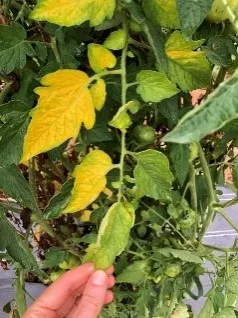
Grey mold (Botrytist)
Symptoms:
Gray mold appears as a gray-brown velvety mold covering the stems or leaves of immature plants. Wilting above the affected area is caused by infections that surround the stem. Gray spores cover dying flowers and fruit calyxes in the field. The spore-bearing structures resemble grape bunches when viewed through a hand lens. Infections move from flowers or fruit to the stem, which turns white and develops a canker, which can girdle it.
Treatments:
Chlorothanil +pyrimethanil 40% (500ml) Do not allow excessive humidity in the tunnel. Do not allow the temperature of the tunnel to exceed the limits.
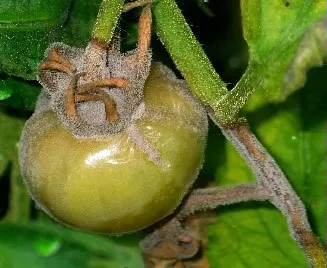
Damping off (Pythium)
Symptoms:
Damping-off-affected seedlings often fail to emerge or collapse and die soon after emergence. At the soil line, stems typically have a black, shrivelled area. Damping-off often only affects regions with poor drainage or compacted soil, but it can harm entire fields, especially in early plantings exposed to rain.
Treatments:
Do not sow densely. Adopt proper rotation of crops. Do not sow the seed too deep. Do not keep the height of tracks high and water should not stand in the ground. Arrange better water drainage in the ground. Flood the chemicals recommended in Tomato Wilt.
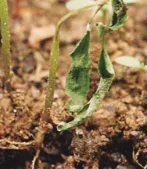
Nematods
Symptoms:
Nematode damage can cause typical symptoms in both above- and below-ground plant components. Stunting and general unthriftiness, premature wilting , slow recovery to increased soil moisture conditions, leaf chlorosis (yellowing), and other symptoms typical of nutrient inadequacy are all common foliar indications of nematode infestation of roots.
Treatments:
Carbofuran (8 kg per acre) Remove the diseased plants. Leave the field fallow for a while before planting a fresh crop, and then plough it so that the subsoil comes up and dries out properly. This will significantly lower the nematoad population.

Collar rot
Symptoms:
Collar rot stem lesions are tiny, black, and sunken. They will produce circular or elongated lesions with or without noticeable concentric rings with light centres as they grow.
Treatments:
Flooding of Thiophanate methyl 70% (1 kg per acre) Or Fosetyl Aluminum 80% (1kg per acre)

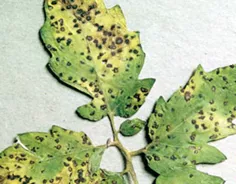
Leaf spot of tomato
Symptoms:
Small wet spots appear on the leaves which later turn yellow or brown. In case of extreme heat, these spots merge and the plant is unable to achieve its nutritional needs.
Treatments:
Pyraclostrobin + Metiram 60% (600 g per acre in 100 litter water) Or Trifloxystrobin+ tebuconazole 75% (65 g in 100 litter water)
Root rot
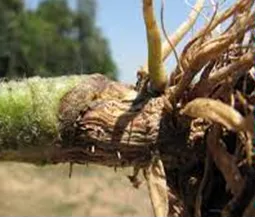
Symptoms:
The leaves turn yellow and their growth stops completely. The leaves look wilted. The stem of an infected plant near the ground level appears more swollen than healthy plants, and if the plant is uprooted, the roots appear to be twisted. The attack of this disease becomes more severe in dry soil as the underground temperature rises.
Treatments:
Flooding of Thiophanate methyl 70% (1 kg per acre) Or Fosetyl Aluminum 80% (1kg per acre)
Bacterial blight
Symptoms:
Symptoms of the disease include yellowing of leaves, stunting and wilting of plants. If the roots of an infected plant are cut and placed in water, the bacterial material starts oozing from it. The roots of the plant appear pink or dark brown in color. The disease occurs due to plant injury during weeding or due to attack by underground nematodes. The disease disrupts the plant's food and water supply system and the plant dies within a day or two.
Treatments:
Copper oxychloride + kasugamycin 47 % (250-500 g in 100 litter water)

Tomato leaf curl virus
Symptoms:
Early symptoms include yellowing and curling of new leaves. Most of the leaves turn yellow. But the part around the veins remains greenish. Gradually, all the leaves become twisted and the plant becomes very small in height. Due to the attack of some types of virus, the veins of the leaves are thick and swollen. Flowers wither, resulting in less fruit.
Treatments:
Amino acids (400-500 ml spray) Multi micro-nutrients (Zinc, iron, manganese, copper) 10% (500ml spray) Weeds should be destroyed. At the beginning of the disease, destroy the few affected plants. The sap-sucking insects should be treated with appropriate insecticides. Use small amounts of balanced fertilizers at appropriate intervals to increase plant vigor.

Blossom end rot
Symptoms:
Bloom-end rot is distinguished by a big, brown to black, dry, leathery patch at the fruit. The initial signs are little, water-soaked spots on the blossom end of immature or green fruit that resemble bruises.This happens due to calcium deficiency.
Treatments:
Trifloxystrobin + tebuconazole 75% (65 g in 100 litter water) Use Calcium rich fertilizers

Insects and their management
Cut worm
Damage:
Early in the season cutworms may cause stand loss by cutting off seedling or recently transplanted tomato plants at the soil line. Later in the season these pests can also injure tomatoes by eating irregular holes in the surface of fruits; tomato fruit touching the ground are generally the most seriously injured.
Treatments:
Scout and destroy midges in the ground near freshly cut plants and use light traps to kill moths. Destroy the weeds. Apply water after hoeing. Permethrin 0.2% at the rate of 5-3 kg mixed with 15-10 kg ash per acre and spread early in the morning when dew has fallen.

Tomato fruit borer
Damage:
Young larvae consume tender foliage. Mature larvae bore circular holes in the ground. Only put a portion of its body into the fruit and eat the insides.
Treatments:
Emamectin benzoate 400ml spray per acre. Kill moths by setting light traps. Apply a protective spray with an appropriate poison immediately after flowering. Place the trichogramma card. Collect the infested fruits and press them into the ground

Jassid
Damage:
Adults and nymphs suck the sap from the lower surface of the leaves, which weakens the plants and produces very few fruits. In case of severe attack, the leaves appear scorched and fall off.
Treatments:
Nitenpyram 10AS (200ml per acre) Or Flonicamid 50 WG (60 g per acre) Or Thiamethoxam 25WG (24 g per acre)

Aphid
Damage:
Both juveniles and adults suck sap from the lower surface of the leaves and exude a sweet sap, which causes the leaves to turn black due to the formation of black spores and significant impact on the metabolism of the leaves. Plants that have been attacked become weak and produce low yields. This insect is also responsible for the spread of viral infections.
Treatments:
Carbosulfan 20 EC 500 ml per acre Or Dimethoate 40 EC 330 ml per acre

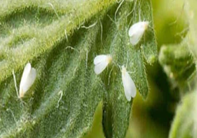
Whitefly
Damage:
Sap is sucked from the lower surface of the leaves by adult and larvae. Furthermore, they exude a sticky material from their bodies, causing the leaves to seem darkened. Plant food production is being damaged. This insect also transmits a variety of viral diseases.
Treatments:
Spirotetramat 240 SC (125 ml per acre) Or Pyriproxyfen 10.8 EC (400 ml per acre) Or Acetamiprid 20 SP (125 g per acre) Use power sprayer to control white fly
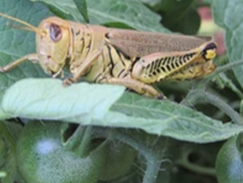
Surface grass hopper
Damage:
The growing plants are cut and destroyed by adults and juveniles. However, its attack takes place anywhere on the field.
Treatments:
Acephate 97 DF (250-300 g per acre) Or Bifenthrin 10 EC (250 ml per acre)
Leaf minor
Damage:
The eating of green matter has an impact on the process of food formation. The leaves quickly shrivel and drop off.
Treatments:
Bifenthrin 10% (330ml per acre) Or Spinosad 240 Sc (40 ml per acre) Or Mine Guard 50% 40gm/a

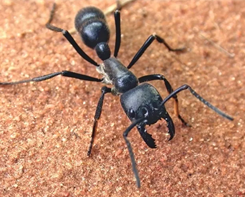
Ant
Damage:
These insects take the seed out of the ground before it begins to germinate.
Treatments:
Fipronil 5% Sc flooding of 960 ml/a
Harvesting
Harvest the tomatoes in the evening and wash them with water to cool them down to maintain freshness and deliver the fruit to the local market the next morning. If the fruit is to be sent to a remote area, then the fruit should be picked when it is slightly unripe, i.e. when the color is changing, otherwise only ripe fruits should be picked. Transport it at night so that the temperature would be low and the fruit will not damaged or wasted.




.webp)
